
TL;DR
- Court filings and court orders are different artifacts and should not be treated as interchangeable.
- Most legal outcomes depend on procedural stage and timing, not just one headline filing.
- Readers get higher-quality signal when claims are tied to the controlling rule text.
What we know
This explainer treats "charlie kirk federal appeal timeline" as a verification problem first, then an analysis problem, so interpretation never outruns the available record. This page is written as a procedure-first legal explainer. It distinguishes filings, rulings, and appellate posture so readers do not confuse advocacy with adjudication.
For legal stories, the sequence is fixed: identify the filing type, identify the court level, identify the controlling rule text, then identify the most recent order.
Source-grounded facts
- FRAP Rule 4 provides the dated record used to evaluate "frap rule 4" claims, reducing the risk that reposted summaries are mistaken for current procedural status.
- FRAP Rule 8 is used as the controlling reference for the "notice of appeal" portion of this topic, which is why this page treats it as a baseline checkpoint before interpretation.
- The "record on appeal" claim path in this article is anchored to U.S. Courts: Court Role and Structure, then compared with the latest stage-specific record before any trend conclusion is stated.
- U.S. Courts: Current Rules of Practice and Procedure provides the dated record used to evaluate "stay pending appeal" claims, reducing the risk that reposted summaries are mistaken for current procedural status.
Reporting vs analysis boundary
The reporting layer of this article only includes what official texts currently support. Analytical language is kept conditional and is revised only after the source trail changes.
Verification workflow used in this article
- Collect current-source evidence and archive the URL.
- Confirm that the cited stage matches the cited claim.
- Separate direct reporting statements from interpretation statements.
- Avoid headline certainty until cross-source consistency appears.
- Version updates with clear date stamps for reader traceability.
Frap rule 4 in context
In this topic area, "frap rule 4" claims are strongest only when the evidence path is explicit and time-stamped. This analysis step begins with U.S. Courts: Current Rules of Practice and Procedure and only then evaluates secondary interpretation. In verification workflows, this reduces the chance that commentary outruns record changes. The result is slower but higher-integrity updates over the full cycle.
Notice of appeal in context
For "notice of appeal", the highest-value check is whether the cited record actually corresponds to the claimed process stage. To avoid chronology drift, this subsection uses FRAP Rule 4 as the primary update reference. In operational terms, this means updates should move only when records move. If records remain incomplete, the confidence label remains provisional by design.
Record on appeal in context
In this topic area, "record on appeal" claims are strongest only when the evidence path is explicit and time-stamped. Rather than infer from commentary volume, this section ties the claim to FRAP Rule 8. In practical reporting, the best safeguard is to separate what is filed from what is decided. Where documentation is partial, this page intentionally keeps uncertainty language explicit.
Stay pending appeal in context
For "stay pending appeal", the highest-value check is whether the cited record actually corresponds to the claimed process stage. The evidence baseline for this slice is U.S. Courts: Court Role and Structure, and update language is constrained by that source state. In fast cycles, this approach reduces confidence drift and keeps language proportional to evidence. When source consistency is missing, the claim is retained as unresolved rather than upgraded.
Topic-specific interpretation checks
Check 1: Stage precision for "frap rule 4"
A strong reading workflow for "charlie kirk federal appeal timeline" begins with stage identification and source date confirmation. Use "frap rule 4" as a scoped term: define where it sits in the sequence and what it cannot prove on its own. The documentation checkpoint here is FRAP Rule 4; if the referenced stage is missing, confidence should stay provisional. This is reporting, not prediction: readers should see what changed in the record and what remains unresolved.
Check 2: Document comparability across "notice of appeal" and "record on appeal"
After stage labeling, compare only records with the same procedural function and similar time windows. For this post, that means reading "notice of appeal" against "record on appeal" without collapsing them into one claim bucket. Cross-check wording with FRAP Rule 8 and sequence timing with U.S. Courts: Court Role and Structure before updating summaries. When records conflict, the safer publication move is to state the split and document the next expected update.
Check 3: Revision discipline for "stay pending appeal"
The closing safeguard is update governance: every revision should declare whether facts changed or only framing changed. When tracking "stay pending appeal", publish timestamped status notes even if the core record has not moved. This keeps the article useful as a reference page instead of a one-cycle recap.
What's next
- Document unresolved points for "charlie kirk federal appeal timeline" so readers can distinguish open procedure from completed outcomes in FRAP Rule 4.
- Use publication dates to prevent stale commentary on "frap rule 4" from being presented as a fresh development in FRAP Rule 8.
- If "notice of appeal" is unchanged in U.S. Courts: Court Role and Structure, keep the prior status label and update only timestamps.
- For the next revision cycle, compare wording about "record on appeal" across at least two records, including U.S. Courts: Current Rules of Practice and Procedure.
- Revisit this page after the next expected process milestone tied to "stay pending appeal" and map changes to FRAP Rule 4.
- Set a dated checkpoint for "charlie kirk federal appeal timeline" and verify status against FRAP Rule 8 before changing headline language.
Why it matters
- A scoped article on "charlie kirk federal appeal timeline" helps users find one procedural answer without bouncing between partially overlapping pages.
- Clear section boundaries lower keyword cannibalization risk because this post targets a specific stage and evidence set.
- Procedure-first framing improves trust because every claim can be traced to rule text or docket-linked documentation.
- Legal stories are often misread when filing events are framed as outcomes; this page keeps adjudication milestones distinct from advocacy filings.
- Readers tracking "frap rule 4" and "notice of appeal" can evaluate chronology directly instead of relying on second-hand summaries.
Scope guardrails for this query
- Separate event reporting from interpretation updates so each revision has a clear reason for change.
- Keep internal links directional: this page for process, related pages for people/events summaries.
- Use one canonical source trail for each claim branch and disclose when different records are being compared.
- Keep "charlie kirk federal appeal timeline" scoped to this post's process lane; route adjacent questions to linked explainers instead of broadening this page.
- For this query cluster, re-check core language against FRAP Rule 4 before updating summary paragraphs.
- Avoid certainty inflation when two records are out of sync; publish the mismatch and next checkpoint.
Related reading on this site
- Charlie Kirk federal court process guide for 2026 coverage
- Charlie Kirk media claim verification playbook
- movement strategy hub
- Charlie Kirk latest political news February 2026
Sources
- FRAP Rule 4: https://www.law.cornell.edu/rules/frap/rule_4
- FRAP Rule 8: https://www.law.cornell.edu/rules/frap/rule_8
- U.S. Courts: Court Role and Structure: https://www.uscourts.gov/about-federal-courts/court-role-and-structure
- U.S. Courts: Current Rules of Practice and Procedure: https://www.uscourts.gov/forms-rules/current-rules-practice-procedure
Image Credit
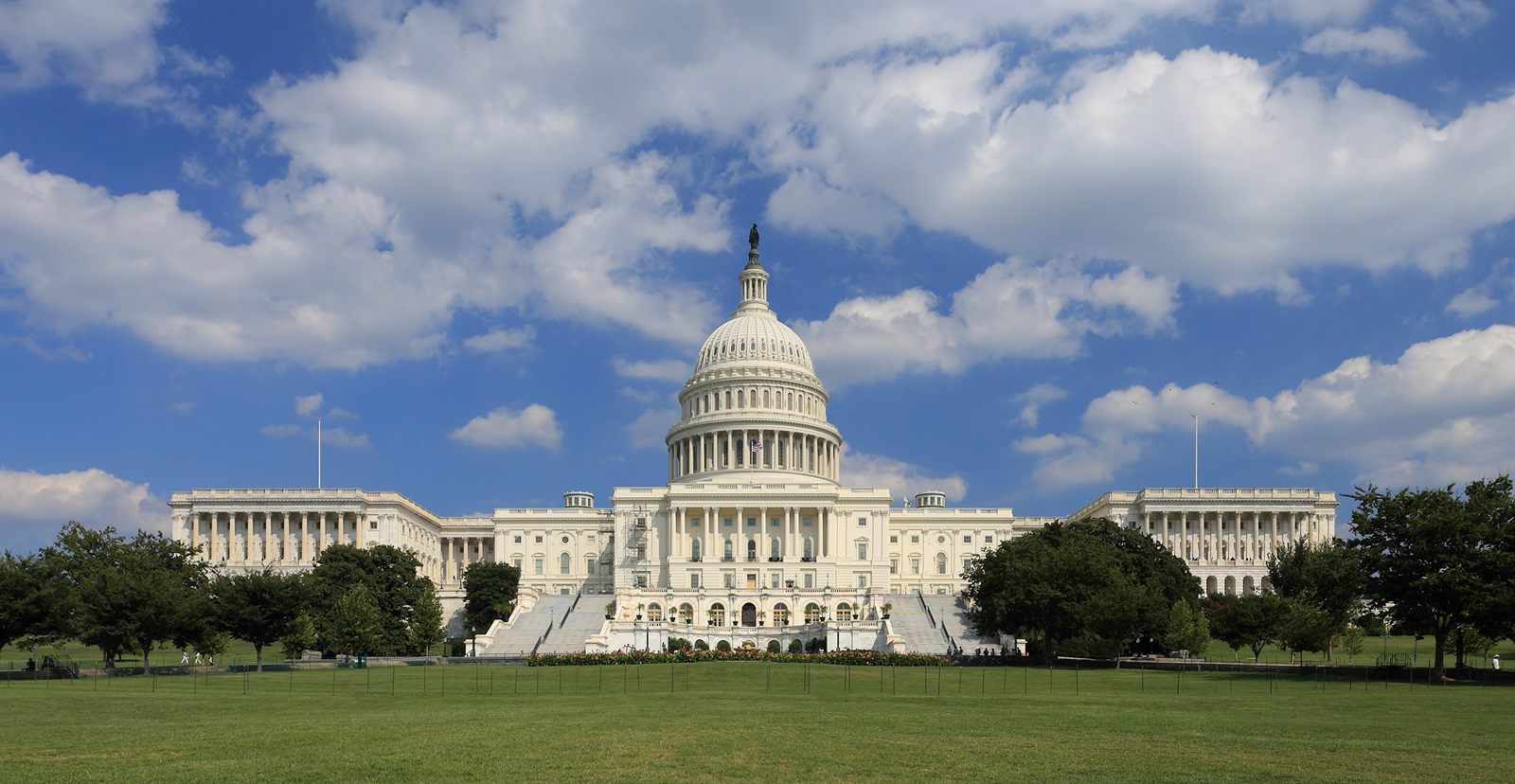
- US Capitol west side, via Wikimedia Commons (CC BY-SA 3.0): https://commons.wikimedia.org/wiki/File:US_Capitol_west_side.JPG
