We are charlie kirk song explained is easiest to follow when you build a timeline from source uploads and then test each retelling against that timeline. Instead of debating vibes, focus on three measurable layers: where the audio was first distributed, how platform recommendation systems amplified it, and which claims about authorship or intent are actually documented.
What is "We Are Charlie Kirk" and where did it come from?
At the simplest level, "We Are Charlie Kirk" is a viral track circulated across YouTube, short-form video apps, and streaming profiles linked to the name Spalexma. Public platform pages show the title and release window, while commentary communities layered on interpretation, parody, and debate. The first mistake many people make is treating commentary posts as the primary record.
A better method is:
- Start with platform-native pages for the track.
- Confirm date stamps and channel attribution.
- Compare later explanations against those source records.
The YouTube Topic upload is a baseline source because it includes official distribution metadata and a release-date marker. Know Your Meme's explainer then documents how the meme framing evolved and which phrases users repeated most often in reaction content.
Why this query has sustained search demand
Search intent around this phrase clusters into five recurring needs:
| Search intent | What users want | Best evidence type |
|---|---|---|
| Identification | Is this the same viral song everyone is quoting? | Original upload URL and title match |
| Attribution | Who uploaded it and under what profile? | Platform profile metadata |
| Production method | Was this human-performed, AI-generated, or hybrid? | Multi-signal audio and release-pattern checks |
| Meaning | Are lyrics sincere, satirical, or remix bait? | Full lyric text + context of clips |
| Verification | Which claims are confirmed vs speculative? | Timestamped source log |
When coverage misses one of these intents, users keep searching because they are still missing one layer.
Is "We Are Charlie Kirk" AI-generated?
The careful answer is: strong indicators point to AI-assisted or AI-generated production style, but you should avoid absolute claims unless the creator provides explicit production files or a direct statement. In the current media environment, confidence language is more accurate than courtroom-level certainty language.
Signals that increase AI-generation confidence
No single signal proves origin. Combined signals improve confidence:
- Unusually fast release cadence across similarly styled tracks.
- Synthetic vocal textures with repeated phoneme edges.
- Arrangement patterns that mirror prompt-generated composition defaults.
- Distribution behavior that scales through many low-friction repost accounts.
The AP's reporting on Deezer's AI-content tagging in 2025 provides useful platform context: Deezer said a significant share of daily uploads were fully AI-generated and described anti-fraud enforcement patterns around automated streaming behavior. That does not prove this specific track's pipeline, but it does establish why platform-level AI labeling and fraud controls now matter to this topic.
For legal context, the U.S. Copyright Office's AI guidance resources remain a stable reference point on authorship and disclosure boundaries in works containing AI-generated material: https://www.copyright.gov/ai/.
Why "AI" claims spread faster than verification
AI claims often spread first because they are emotionally simple and technically vague. Verification takes longer because it requires evidence assembly. This is exactly the pattern documented in our media claim verification playbook: faster narratives are usually lower context, while higher-confidence narratives need source friction.
A practical rule: if a post labels a track "definitely AI" without showing source metadata or technical evidence, treat it as medium- or low-confidence commentary, not finalized analysis.
Who is Spalexma, and why does the name keep appearing?
Spalexma appears in user questions because the name is attached to public distribution pages for the track and became shorthand in reaction communities. That does not automatically answer deeper attribution questions, but it does explain why the query pair "Spalexma We Are Charlie Kirk" keeps recurring in search behavior.
Attribution checklist for creator-name claims
Before repeating any creator-identity claim, test these points:
- Does the profile match across multiple platforms, or only one?
- Are release dates consistent across services?
- Are there official statements linked from profiles, not repost accounts?
- Are user-generated lyric pages conflating artist identity with uploader identity?
This checklist is especially important when politically charged tracks become meme objects, because identity claims are often merged with narrative claims.
What to do when attribution is incomplete
If you cannot resolve all attribution details:
- Publish what is verifiable now (title, dates, distribution pages).
- Label unresolved items explicitly ("creator identity not independently confirmed beyond platform metadata").
- Update with a changelog when stronger evidence appears.
That approach is more trustworthy than forcing a complete story from partial data.
Why did the song go viral on TikTok and short-form video platforms?
Virality came less from the full track and more from repeatable clip moments. In short-form systems, users rarely consume the full source object first. They consume fragments that signal identity, irony, or group positioning.
The four-stage spread pattern
| Stage | What users post | Why it scales |
|---|---|---|
| Discovery | "What is this song?" reaction clips | Novelty + confusion |
| Labeling | "Worst song ever" or "unironically hard" frames | Polarization boosts replies |
| Remixing | Lyric edits, sound overlays, duet formats | Low editing cost |
| Canonization | Meme summaries and origin explainers | New users need a catch-up package |
This same cycle appears in our viral clip trend analysis, where high-share content depends on instantly recognizable audio hooks plus social identity signaling.
Why "worst song of all time" became a keyword cluster
Polarized framing phrases often become search multipliers. People search the phrase because they saw it in comments, not because they already agree. That is why both mocking and supportive communities drive the same keyword upward. In practical SEO terms, controversial descriptor phrases can act as demand amplifiers, even when user intent is mixed.
How to verify lyrics, quotes, and edited versions
Lyric confusion is one of the biggest failure points in this topic. Users frequently quote lines from edited clips, then attribute those lines to the original release. If you are publishing coverage, treat every quoted lyric as a claim requiring a source check.
A five-minute lyric verification workflow
- Open the full original upload and capture timestamped lines.
- Compare with lyric websites that allow open edits.
- Mark discrepancies between source audio and community transcriptions.
- Record whether the quoted line appears in official distribution audio or only in remixes.
- Publish the quote with timestamp evidence.
Confidence labels for quote claims
High confidence: line appears clearly in original upload.Medium confidence: line appears but audio quality or diction ambiguity remains.Low confidence: line appears only in derivative clips or unverified text pages.
This method mirrors the confidence discipline used in the site's Claim vs Evidence tracker, where unresolved claims remain visible instead of being flattened into certainty.
How this topic fits broader AI-music and platform-policy trends
The song's virality happened inside a much larger shift: music platforms, rights holders, and regulators are all adapting to AI-generated and AI-assisted audio at speed. This means users now see three overlapping disputes in one thread:
- Creative authenticity ("Is this real artistry?")
- Rights and compensation ("Who gets paid for what?")
- Platform integrity ("Is traffic organic or manipulated?")
AP's Deezer coverage highlighted how platforms have begun labeling AI-generated content and limiting royalties on suspected fraudulent streams. That industry context helps explain why a single viral track can trigger larger arguments about ethics, revenue, and trust.
For legal/policy readers, pair this with process-first guides already on site:
- Turning Point USA vs Turning Point Action for entity and disclosure distinctions.
- Election rumor-control workflow explainer for structured evidence handling in high-noise narratives.
- Polling methods guide for 2026 for uncertainty communication practices transferable to media verification.

Editorial playbook: how to cover this topic without adding noise
If you are writing about this query, your edge is not hot takes. Your edge is clean process.
Recommended section structure for high-integrity coverage
- What is confirmed (dates, links, platform metadata)
- What is likely (AI indicators with confidence level)
- What is unresolved (identity, intent, disputed lyrics)
- What changed today (new upload, statement, takedown, remix milestone)
This structure helps readers quickly separate facts from interpretation.
Mistakes to avoid
- Treating a reaction clip as the primary source.
- Quoting unsourced lyric text as definitive.
- Collapsing "AI-assisted" and "fully AI-generated" into the same claim.
- Publishing final judgments without a revision path.
If your editorial workflow cannot show how claims were tested, the article will age poorly and lose trust.
Practical checklist for readers: verify before you share
Most readers do not need a full media-forensics workflow. They need a compact checklist they can use in under 10 minutes.
Ten-minute user checklist
| Step | What to do | Pass condition |
|---|---|---|
| 1 | Find original upload link | URL is direct and timestamped |
| 2 | Confirm track title and profile | Same across two platforms |
| 3 | Listen to full version | No reliance on clipped remixes |
| 4 | Verify quoted lyric lines | Timestamped in original audio |
| 5 | Cross-check at least one explainer | Source cites direct links |
| 6 | Label uncertainty | Share with confidence note |
If two or more pass conditions fail, do not publish certainty claims yet.
A better way to write social posts about disputed tracks
Instead of writing: "This proves X."
Write: "Based on source upload metadata and clip review, this appears to be X with medium confidence; unresolved points are Y and Z."
That single sentence style dramatically lowers misinterpretation risk.
FAQ: We are Charlie Kirk song explained
What is the "We Are Charlie Kirk" song?
It is a viral track distributed on mainstream platforms and heavily remixed in short-form video contexts. Most confusion comes from derivative clips being treated as originals.
Is "We Are Charlie Kirk" AI-generated?
There are strong AI-style indicators in production and distribution behavior, but careful coverage should describe confidence level rather than overstate certainty unless direct creator evidence is published.
Who is Spalexma in this story?
Spalexma is the name attached to widely referenced distribution pages for the track. Readers should still verify cross-platform metadata before making stronger identity claims.
Why did the song trend so hard online?
It combined high-recognition political identity cues with remix-friendly audio and polarized commentary labels, which are exactly the ingredients short-form platforms reward.
Where can I verify the original source and timeline?
Start with the source upload pages, then use one timeline explainer and one independent report on AI-music platform policy before sharing certainty claims.
Sources
- YouTube Topic upload: We Are Charlie Kirk
- Know Your Meme explainer: What Is The 'We Are Charlie Kirk' AI Song By Spalexma?
- AP News on Deezer AI labeling and fraud controls: Music streaming service Deezer adds AI song tags in fight against fraud
- U.S. Copyright Office AI policy hub: Copyright and Artificial Intelligence
Image Credit
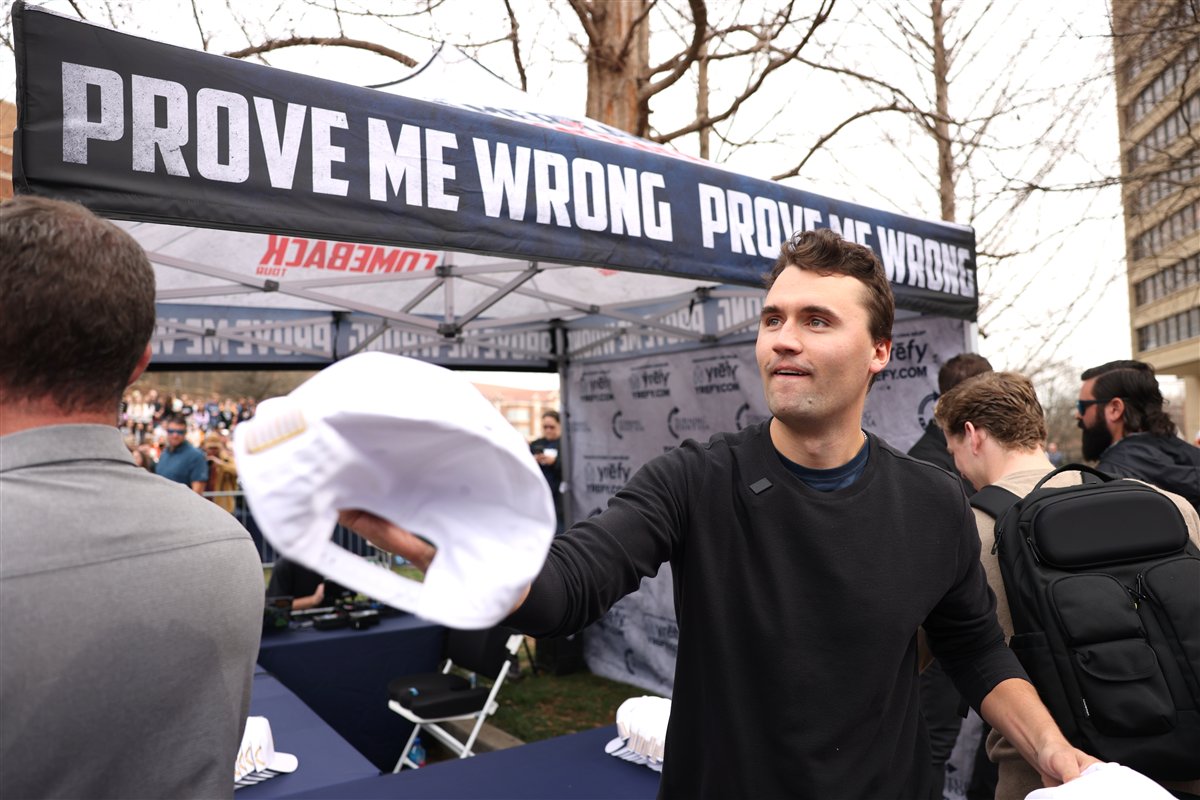
- Charlie Kirk (54506798221), photo by Gage Skidmore, via Wikimedia Commons (CC BY-SA 2.0): https://commons.wikimedia.org/wiki/File:Charlie_Kirk_(54506798221).jpg
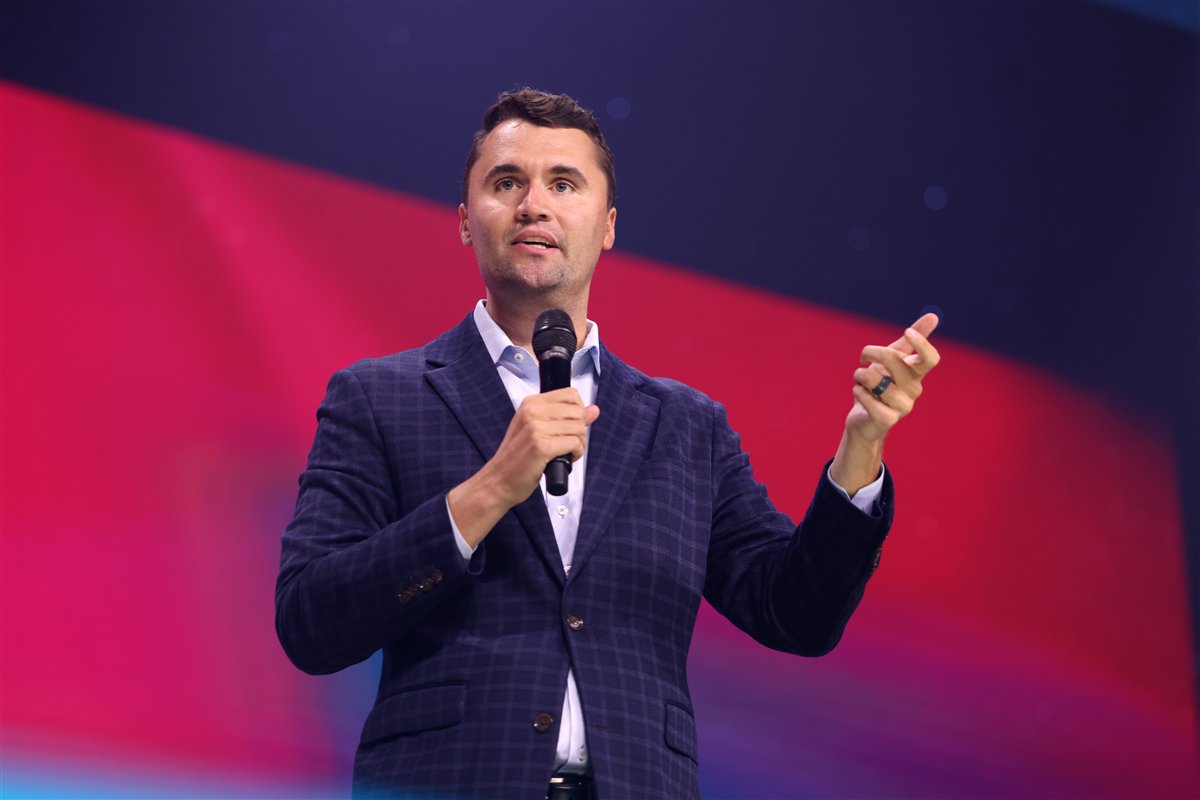
- Charlie Kirk (54670963221), photo by Gage Skidmore, via Wikimedia Commons (CC BY-SA 2.0): https://commons.wikimedia.org/wiki/File:Charlie_Kirk_(54670963221).jpg
- Phoenix, Arizona (55076503847), via Wikimedia Commons (Public Domain): https://commons.wikimedia.org/wiki/File:Phoenix,_Arizona_(55076503847).jpg
- US Capitol west side, via Wikimedia Commons (CC BY-SA 3.0): https://commons.wikimedia.org/wiki/File:US_Capitol_west_side.JPG
.jpg)
.jpg)
.jpg)
