

Charlie kirk speaking fee searches usually come from one of three moments: a campus announcement, a fundraising dinner flyer, or a viral post that quotes a single dollar figure as if it applies to every event. If you want an accurate answer instead of recycled estimates, treat the fee question as a contract question. Who booked the event, when, under what format, and what did the quote include?
This guide is built for readers who need citation-grade clarity: journalists, researchers, student organizers, and anyone writing explainers that will be checked later.
How much is Charlie Kirk speaking fee right now?
There is no single public number that applies to all bookings. Public-facing speaker-directory pages currently show different range estimates. For example, one booking directory lists a broad fee range in the $10,000-$20,000 bracket, while another agency-style listing presents a higher bracket. Those pages can be useful directional signals, but they are not signed contracts.
What you can say confidently is this: publicly visible ranges indicate that Charlie Kirk speaking fee discussions are negotiated and tiered by event context, not fixed to one universal rate card.
What public fee pages typically represent
| Source type | What it can tell you | What it cannot prove by itself |
|---|---|---|
| Speaker directory pages | A marketed fee range and booking intent signal | Actual final amount for a specific event |
| Agency profiles | Typical quote bands and logistics language | Whether a quoted band was accepted in a real contract |
| News reports on one event | A historical fee claim for that event and date | Universal current pricing across all event types |
| Contract docs/invoices | The strongest event-specific amount evidence | Future pricing at different venues |
If you are publishing a number, always attach a date and source class in the same sentence.
Why do Charlie Kirk speaking fee numbers differ across websites?
The short answer is that websites are often describing different products. A 20-minute keynote at a private conference is not the same product as a campus lecture with Q&A, and neither is equivalent to a high-production gala appearance.
Main drivers of quote variation
- Event format (keynote only vs keynote + Q&A + meet-and-greet).
- In-person vs virtual format.
- Event location and travel burden.
- Date flexibility and booking lead time.
- Exclusivity clauses and media-use rights.
- Whether travel and lodging are bundled or billed separately.
Once you understand those variables, the spread in published ranges is not surprising. The error happens when a post drops all context and presents one figure as definitive.
The “range vs contract” distinction
A range listing is a marketing abstraction. A contract amount is a negotiated result. Treating those as the same thing is the biggest analytical mistake in this keyword cluster.
That same discipline appears in our Charlie Kirk salary turning point usa guide: category labels matter because similar-looking dollar figures can represent different underlying definitions.
Is Charlie Kirk speaking fee public record?
Sometimes partially, sometimes not. If a public institution pays for an appearance, payment details may be available through open-records processes or reporting. If a private sponsor or private organization handles the booking, details may remain non-public unless disclosed by participants or leaked through credible reporting.
Public-record likelihood by event type
| Event context | Likelihood of public fee visibility | Typical evidence path |
|---|---|---|
| Public university event funded with institutional money | Medium to high | Public records request, procurement records |
| Local party fundraiser via committee spending | Medium | Campaign/disclosure filings, local reporting |
| Private conference with private sponsor funding | Low | Voluntary disclosure or investigative reporting |
| Media-hosted branded event | Low to medium | Press reports, occasional sponsor disclosures |
So when someone asks, “is the fee public?”, the operational answer is: only in specific contexts, and usually for a specific event window.
What is the fastest way to verify a speaking-fee claim?
Use a five-step workflow that can be completed in under 15 minutes for most trending claims.
Step 1: Pin the exact claim language
Capture the full sentence, including whether it says speaking fee, appearance cost, honorarium, or booking cost. These are often mixed incorrectly in social posts.
Step 2: Identify claim type
Classify it as one of these:
Range claim(example: “usually costs X to Y”).Specific-event claim(example: “paid X in this county dinner”).Universal claim(example: “always charges X”).
Universal claims should be treated as high-risk unless supported by repeated event evidence.
Step 3: Locate primary or near-primary source
Check whether the number comes from:
- A directory or agency page.
- A newsroom report describing a specific booking.
- A document trail (contract, invoice, disclosure filing).
Step 4: Add contract-scope qualifiers
If a number is cited, add scope labels: date, city, event type, and what services were included.
Step 5: Publish with confidence label
High confidence: contract or official document evidence.Medium confidence: credible event-specific reporting without direct contract docs.Low confidence: unsourced social quote or copy-pasted listicle claim.
This is the same source-priority logic we apply in the media claim verification playbook, and it materially reduces correction risk.
How should you interpret speaker-directory ranges for this topic?
Directory pages are useful for market context but weak for exact-truth claims. They are primarily sales pages, so their main function is lead capture and qualification, not historical accounting.
What directory ranges are good for
- Showing that the market perceives meaningful booking demand.
- Providing rough budget planning bands.
- Signaling how agencies position event tiers.
What directory ranges are bad for
- Proving what a specific event paid.
- Proving that a range is current for every month of the year.
- Proving that all listed fees include the same services.
A balanced sentence structure looks like this: “Public booking directories currently show range estimates from low five figures to higher brackets, but event-specific invoices depend on negotiated terms.”
Can you compare Charlie Kirk speaking fee to other commentators accurately?
Only with normalized assumptions. Side-by-side comparisons fail when one profile includes travel and another excludes it, or when one figure is keynote-only and another includes a full-day package.
Normalization checklist for fair comparisons
| Comparison input | Normalize this before ranking |
|---|---|
| Fee amount | Clarify whether it includes travel/lodging |
| Duration | Match keynote length and add-on sessions |
| Event type | Compare similar audience and sponsor context |
| Format | Separate virtual and in-person deals |
| Date | Use the same year or quarter window |
Without these controls, “Speaker A costs more than Speaker B” is usually just a formatting artifact.
What should student groups and event planners budget for?
Most planners should budget in scenarios, not a single point estimate. That means setting a base case, expected case, and high case.
Practical budgeting model
| Scenario | Planning assumption |
|---|---|
| Base case | Short format, flexible date, limited add-ons |
| Expected case | Standard keynote + Q&A and basic travel |
| High case | Prime date, extensive add-ons, premium logistics |
If your team needs a governance-safe process, require every estimate to include a written assumptions block. That protects planning discussions if final quotes move materially.
For organizations building student events, pair this with our campus chapter guide and high school chapter guide so the booking conversation fits the broader programming workflow.
How do you write about speaking-fee claims without overclaiming?
Use bounded language. If you only have a range source, say “range estimate.” If you have one historical event figure from reporting, say “reported for that event.” If you have a contract, state the contract scope explicitly.
Recommended language templates
- Range source: “Public directory listings currently indicate an estimated booking range, not a universal fixed fee.”
- Event-specific report: “A published report described a fee of X for that specific event at that time.”
- Document-backed: “The contract/invoice for [event/date] shows X under the listed terms.”
Phrases to avoid
- “He always charges X.”
- “The official fee is X” (unless supported by an official rate card plus evidence of universal enforcement).
- “This proves total annual speaking income” (one event does not prove yearly total).
A precision-first writing style helps this page remain useful even when public discourse is noisy.
How does speaking fee relate to salary and net worth discussions?
It is a separate metric class. Salary from nonprofit filings, speaking fees from event contracts, and net-worth estimates from multi-variable modeling should never be merged without explicit methods.
Metric separation table
| Metric | Best source class | Common misuse |
|---|---|---|
| Salary/compensation | Form 990 and related disclosures | Treated as full personal wealth |
| Speaking fee | Contracts, invoices, event reports, range listings | Treated as universal fixed amount |
| Net worth estimate | Multi-source models with assumptions | Presented as audited figure |
For readers comparing these categories, use our net worth explainer as the companion page. It explains why estimate confidence should drop when liabilities and private contracts are unknown.
Scenario analysis: four common claim patterns
Scenario A: “A site says the speaking fee is $10,000-$20,000”
Treat as a range claim from a directory source. It is useful for rough planning, but not event-proof evidence of a final paid amount.
Scenario B: “Another source says $50,000-$100,000”
Treat as a second range claim from a different agency context. The discrepancy likely reflects market positioning and packaging assumptions, not necessarily a contradiction.
Scenario C: “A report says one event paid $10,000”
Treat as event-specific historical reporting. It can support a dated claim but cannot be generalized to every event.
Scenario D: “Someone says this proves annual speaking income”
Reject that leap unless there is a full event ledger. One or two observed fees cannot establish annual total income reliably.
Editorial checklist for future updates to this page
- Keep every fee figure date-labeled.
- Keep source class labels visible (
directory,report,contract). - Do not convert speaking-fee snippets into annual earnings claims without a complete ledger.
- Update only when you can improve evidence quality, not just wording.
- Preserve a changelog-style note in
editorHistorywhen the evidence base changes.
This checklist keeps the article stable across viral cycles and prevents “silent drift” toward unsourced certainty.
FAQ: Charlie Kirk speaking fee
How much is Charlie Kirk speaking fee?
Public sources commonly present ranges rather than one fixed number, and those ranges differ across booking pages. The safest answer is to treat available figures as context bands and verify event-specific claims with date and scope labels.
Why do Charlie Kirk speaking fee numbers vary so much?
They vary because event type, deliverables, travel, and negotiation terms are not standardized. Two published numbers can both be valid for different booking contexts.
Is Charlie Kirk speaker fee public information?
Sometimes, especially when public institutions fund an event and records are obtainable. Many private bookings are not fully disclosed unless covered by credible reporting or released documents.
What is the best source for Charlie Kirk booking cost?
For a specific event, contracts or invoices are strongest. For rough planning, directory ranges are useful but should never be treated as definitive universal pricing.
How can I verify a speaking-fee claim quickly?
Classify the claim type, identify source class, add date/scope qualifiers, and publish a confidence label. This method avoids overclaiming while still giving readers a practical answer.
Sources
- Speaking Fee directory page: https://speakingfee.com/speaker/charlie-kirk/
- Speaker Booking Agency profile: https://www.speakerbookingagency.com/talent/charlie-kirk
- Colorado Times Recorder event-fee report (historical event context): https://coloradotimesrecorder.com/2019/09/el-paso-gop-reportedly-paying-charlie-kirk-18000-to-speak-at-fundraiser/17733/
- IRS Form 990 overview: https://www.irs.gov/forms-pubs/about-form-990
- IRS Tax Exempt Organization Search: https://www.irs.gov/charities-non-profits/tax-exempt-organization-search
Image Credit
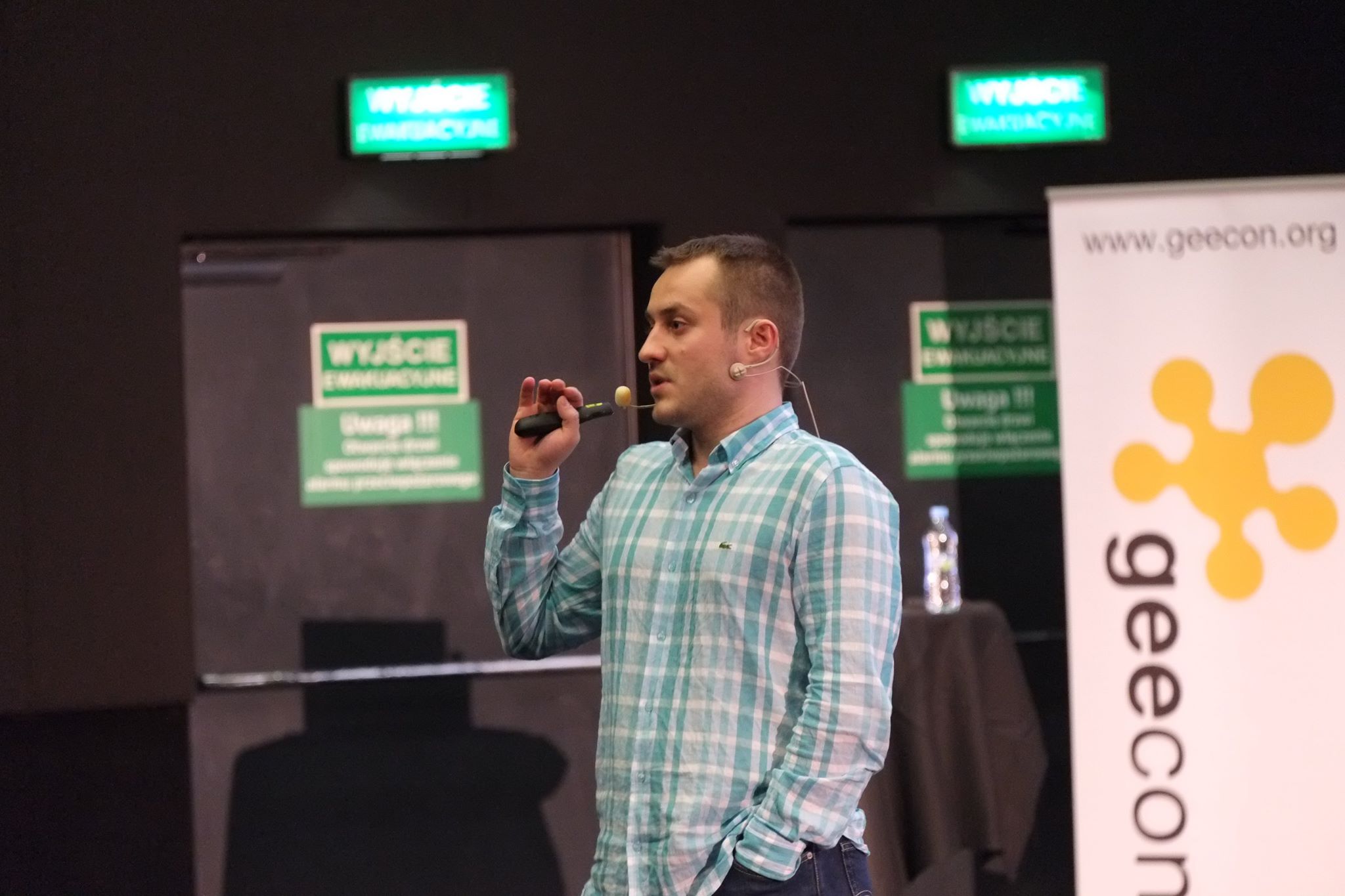
- Public Speaking (34002627821), photo by astro_matt via Wikimedia Commons (CC BY-SA 2.0): https://commons.wikimedia.org/wiki/File:Public_Speaking_(34002627821).jpg
- Public Speaking (34133062445), photo by astro_matt via Wikimedia Commons (CC BY-SA 2.0): https://commons.wikimedia.org/wiki/File:Public_Speaking_(34133062445).jpg
- Podium microphones photo (Unsplash ID: 1475721027785-f74eccf877e2), Unsplash License: https://images.unsplash.com/photo-1475721027785-f74eccf877e2
.jpg)
.jpg)