

Charlie Kirk high school chapter guide starts with one operational truth: if your chapter is not policy-compliant from week one, growth will eventually stall no matter how strong your message is. Most student leaders underestimate how quickly clubs fail when advisor coverage, event approvals, and document controls are weak. If your goal is long-term influence rather than one semester of hype, build your chapter like a small institution with clear procedures, then layer recruiting and content strategy on top.
Why this guide is different from college-focused chapter playbooks
High-school chapter-building has constraints that college guides usually miss: tighter administrator oversight, stricter after-school supervision rules, parent permission friction, and shorter leadership windows before graduation. A high-school team needs a compliance-first model that still creates momentum.
This guide complements the site's campus chapter guide, campus speech strategy analysis, and events and calendar hub, but it focuses on secondary-school execution where school policy and parent communication shape every step.
High-school vs college execution risk
| Operating area | Typical high-school constraint | Practical adjustment |
|---|---|---|
| Club approval | More principal/admin gatekeeping | Submit complete packet with policy citations on day one |
| Advisor coverage | One staff member may supervise multiple clubs | Build primary and backup advisor plan immediately |
| Event hosting | Venue, security, and parent notice controls | Use a standard event lead-time and communication checklist |
| Leadership turnover | Seniors graduate quickly | Train deputies in month one, not month four |
| Messaging controls | District social policies may be strict | Define approved channels and escalation workflow |
How do you start a conservative club in high school without delays?
Start by treating recognition as a process pipeline, not a paperwork moment. Many teams lose one to two months because they announce publicly before understanding local club rules.
Step 1: Gather the governing documents before outreach
Collect the student handbook sections on clubs, speech policies, advisor requirements, and event approvals. Save policy screenshots and page numbers in one shared folder so officers can cite exact language in meetings.
At a minimum, prepare:
- Club constitution with mission, membership terms, officer election cycle, and amendment process
- Officer roster with grade levels and backup role assignments
- Advisor confirmation plus backup advisor target
- Meeting cadence plan with room request pattern
- Event request template and parent communication template
When these files are built first, administrative review moves faster and disagreements become easier to resolve.
Step 2: Build an advisor strategy that survives scheduling conflicts
Advisor loss is one of the fastest ways to freeze a chapter. Ask one primary advisor and identify one backup contact early, then schedule short monthly updates so your advisor role stays active.
Use a simple advisor packet:
- Chapter mission and scope in one paragraph
- Meeting calendar for the semester
- Contact sheet for all officers and deputies
- Event-risk checklist with supervision expectations
- Escalation protocol if disputes occur
This packet lowers friction for staff and helps your chapter look serious and low-risk.
Step 3: Ask administrators for process clarity in writing
Before promoting major events, send three process questions in writing:
- What are the room-request lead times for political discussions?
- What conditions trigger additional supervision or security?
- What communication rules apply for student outreach and flyers?
Written answers reduce conflict later because every team references the same baseline.
Can a school deny a political student club?
Public schools have legal boundaries when recognizing noncurricular student groups, especially under the Equal Access Act framework. Schools can enforce neutral procedural rules, but viewpoint-based exclusion creates legal risk.
For baseline legal context, review Cornell Law's materials on Tinker v. Des Moines and the federal Equal Access Act. FIRE also publishes practical school-speech guidance in its free speech guide.
Process-first escalation path when treatment seems inconsistent
| Escalation stage | What to do | Evidence to keep |
|---|---|---|
| Stage 1 | Request written explanation tied to handbook language | Email thread + policy citations |
| Stage 2 | Ask for meeting with activities/admin leadership | Meeting notes + participant list |
| Stage 3 | File formal school or district appeal | Appeal packet + timestamps |
| Stage 4 | Seek external rights guidance if unresolved | Full chronology and source file |
Use neutral language and policy references. Chapters with clear documentation are easier to defend than chapters that rely only on rhetoric.
What documents does a high school chapter need to stay operational?
Most chapter breakdowns happen when knowledge is trapped in one student's notebook or direct messages. Build a shared operating system instead.
Core governance stack
- Constitution and bylaws with officer terms and election calendar
- Advisor contact protocols and supervision expectations
- Meeting agenda template and attendance log
- Budget request and reimbursement process sheet
- Event planning checklist and post-event report template
Risk-control documents many teams skip
- Social media approval tree (who can post, who reviews, who pauses)
- Incident response template for disruptions or rumor spikes
- Parent communication template for off-hour events
- Leadership handoff checklist for graduating officers
Chapters that maintain these files transition cleanly across school years. Chapters that do not, restart from zero after graduation.
30-minute weekly operations review
Use one standing weekly review to prevent drift:
- Confirm next meeting logistics and advisor availability
- Check pipeline metrics (new contacts, return attendance, active volunteers)
- Review event approvals and unresolved admin requests
- Assign ownership for each open task with due dates
- Document decisions in one shared meeting log
This review creates continuity even when students are overloaded with exams, sports, or seasonal activities.
First-semester execution model: weeks 1 through 12
A chapter should aim for predictable weekly output, not occasional spikes. The goal is to move students from awareness to consistent participation and then leadership.
Phase 1 (Weeks 1-3): recognition and initial recruiting
Deliverables:
- Recognition packet submitted and tracked
- Advisor and backup advisor confirmed
- Weekly table or info-session cadence published
- Interest form connected to follow-up messages
Key metric target:
- 30 to 50 initial contacts with at least 25 percent first-meeting attendance
Phase 2 (Weeks 4-8): onboarding and role assignment
Deliverables:
- Weekly onboarding session with role options
- Committee structure (events, outreach, operations)
- First low-risk public event completed
- Basic social posting calendar running
Key metric target:
- 40 percent second-meeting return rate
- At least 8 to 12 students owning recurring tasks
Phase 3 (Weeks 9-12): event quality and leadership durability
Deliverables:
- One flagship event executed with full checklist
- Deputy assignments for every officer role
- End-of-term handoff packet draft started
- Semester retrospective with next-term adjustments
Key metric target:
- Stable weekly attendance and documented succession plan
| Metric | Healthy range by week 12 | Warning sign |
|---|---|---|
| First-meeting to second-meeting return | 35-45% | Under 20% |
| Active volunteer count | 10+ | Under 5 |
| Officer task completion on time | 85%+ | Under 60% |
| Advisor response lag | Under 72 hours | More than 1 week |
Recruitment system that avoids burnout
Recruitment should run like a funnel, not a random series of announcements.
Contact funnel blueprint
- Discover: hallway/table conversations, class network referrals, event attendees
- Convert: first meeting with clear role options and next date
- Retain: one follow-up message within 24 to 48 hours
- Activate: assign one concrete responsibility during week one
When students leave without a next action, retention falls immediately.
Messaging cadence that works in school environments
- Monday: one practical issue post tied to campus relevance
- Wednesday: meeting reminder with agenda and role opportunities
- Friday: recap with one clear next step
Keep language specific and constructive. Avoid overpromising outcomes you cannot execute with current capacity.
Scenario planning for common recruiting friction
| Scenario | Typical reaction | Better response |
|---|---|---|
| Low first-meeting turnout | Panic and event overexpansion | Tighten follow-up scripts and meeting value proposition |
| High interest but low retention | More social posting volume | Add onboarding roles and mentorship pairings |
| Officer overload | Leadership hoarding tasks | Delegate committees and train deputies early |

Event operations checklist for high-school chapters
High-school events fail less from ideology and more from logistics. Run one standardized checklist for every event.
Pre-event checklist (7-14 days out)
- Room request approved and documented
- Advisor attendance confirmed
- School communication requirements met
- Moderator and speaking roles assigned
- Parent communication sent if required
- Attendance and follow-up capture plan ready
Day-of checklist
- Setup lead arrives early with materials
- Officer roles confirmed (greeter, moderator, follow-up lead)
- Ground rules reviewed before discussion
- End-of-event call to action delivered clearly
Post-event checklist (within 48 hours)
- Thank-you message sent
- Attendance reconciled with contact list
- Next meeting invitation sent
- Debrief notes documented (what worked, what broke, what changes next)
This process keeps events repeatable and protects the chapter from last-minute confusion.
Data discipline: what to track weekly
Student chapters rarely measure enough to improve. Track a small set of metrics consistently.
| Data point | Why it matters | How often |
|---|---|---|
| New contacts by source | Shows which outreach channels work | Weekly |
| Meeting attendance trend | Reveals retention direction | Weekly |
| Active volunteer count | Measures operational capacity | Weekly |
| Event conversion rate | Tests event quality vs hype | Per event |
| Officer task completion | Highlights leadership bottlenecks | Weekly |
A one-page dashboard is enough. The goal is not perfect analytics; the goal is better decisions than last week.
For broader trend context, pair this with the site's weekly roundup and claim tracker so your chapter updates stay source-aware and less rumor-sensitive.
Leadership succession: the difference between one-year and multi-year chapters
If leadership transition starts in spring, you started too late. Succession should begin in month one.
Minimum succession standard
- Each officer has one trained deputy by mid-semester
- Every role has a written handoff document
- Shared accounts use school-compliant custody rules
- End-of-term transition meeting is scheduled before finals period
Handoff packet template
- Role mission and weekly responsibilities
- Critical contacts (advisor, admin, facilities)
- Current project status and unresolved tasks
- Known risk points and recommended fixes
- First 30-day plan for incoming officer
Succession quality is a competitive advantage. Teams that prepare early keep momentum when seniors graduate.
FAQ: Charlie Kirk high school chapter guide
How do you start a conservative club in high school if no chapter exists?
Start with school policy and advisor confirmation before public promotion. Submit a complete club packet, document every response, and launch with a simple weekly meeting cadence so new members can convert into recurring participation.
Can a school deny a political student club outright?
Schools can enforce neutral process and conduct rules, but viewpoint-based denial raises legal concerns, especially in public-school contexts. Keep policy-cited records and use written escalation channels when treatment appears inconsistent.
What documents should be ready before your first event?
Have your constitution, officer roster, advisor confirmation, event request form, and communication plan ready. These files reduce approval delays and make it easier to run events without procedural confusion.
How often should a new chapter meet in the first semester?
Most chapters perform best with one weekly full meeting and one weekly outreach block. Consistency beats occasional large events because members need repeated touchpoints to become active contributors.
What should a chapter do if an advisor leaves mid-year?
Activate the backup advisor plan immediately, notify administrators with the chapter document log, and keep meetings focused on low-risk formats while supervision is re-established. Chapters without a backup often lose weeks of momentum, so this should be pre-planned.
12-week implementation checklist
- Recognition packet submitted with handbook-cited policy references
- Primary and backup advisors confirmed
- Shared operations folder live with governance and event templates
- Weekly recruiting and onboarding cadence published
- First event run with standardized pre/day/post checklist
- Dashboard tracking contacts, retention, and task completion
- Deputy assignments complete for all officer roles
- Draft handoff packets started before final exam period
Sources
- Cornell Law, Tinker v. Des Moines: https://www.law.cornell.edu/supremecourt/text/393/503
- Cornell Law, Equal Access Act (20 U.S.C. chapter 70 subchapter VIII): https://www.law.cornell.edu/uscode/text/20/chapter-70/subchapter-VIII
- FIRE guide to free speech on campus: https://www.thefire.org/research-learn/guide-free-speech-campus
- NCES school enrollment indicator: https://nces.ed.gov/programs/coe/indicator/cga/public-school-enrollment
- TPUSA Student Action resources: https://www.tpusa.com/student-action
Image Credit
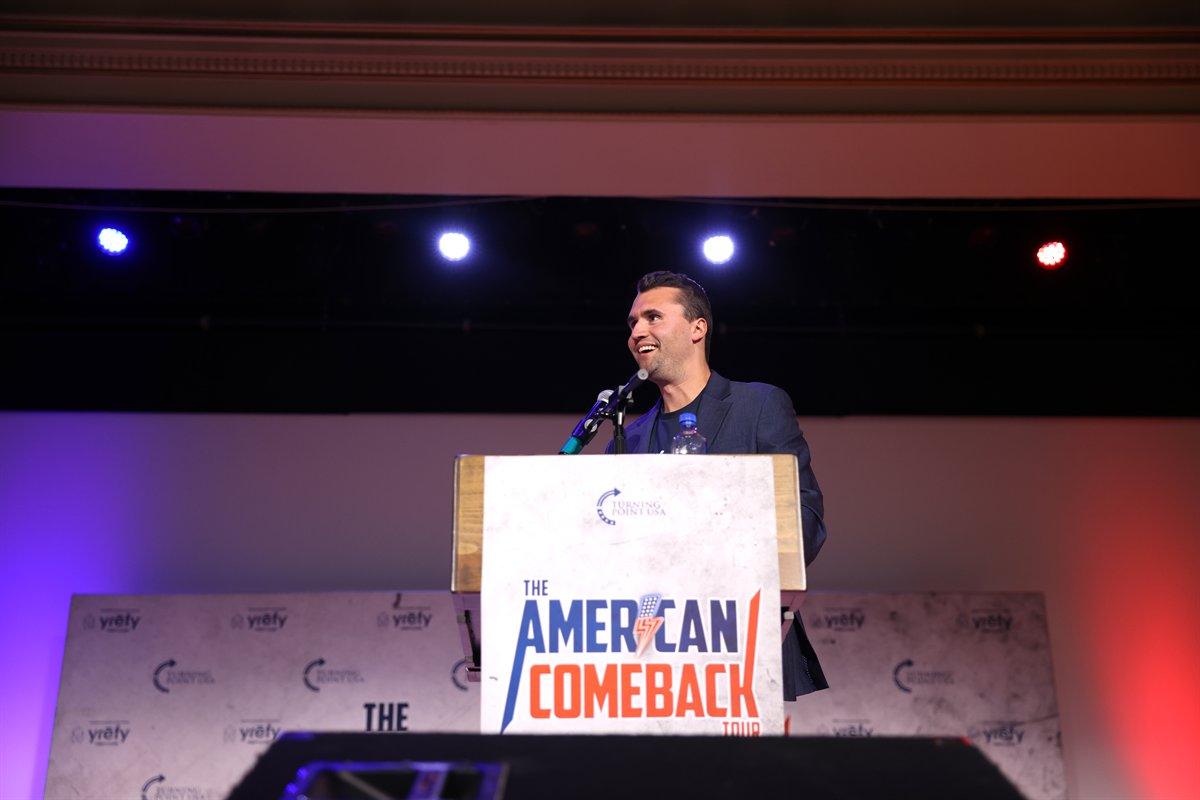
- Charlie Kirk (54670963221), photo by Gage Skidmore, via Wikimedia Commons (CC BY-SA 2.0): https://commons.wikimedia.org/wiki/File:Charlie_Kirk_(54670963221).jpg
- Phoenix, Arizona (55076503847), photo by Gage Skidmore, via Wikimedia Commons (CC BY-SA 2.0): https://commons.wikimedia.org/wiki/File:Phoenix,_Arizona_(55076503847).jpg
- Charlie Kirk (54507259485), photo by Gage Skidmore, via Wikimedia Commons (CC BY-SA 2.0): https://commons.wikimedia.org/wiki/File:Charlie_Kirk_(54507259485).jpg
.jpg)
.jpg)
.jpg)