
TL;DR
- Poll averages reduce volatility but do not erase methodological differences.
- House effects are persistent pollster-level tendencies that can shape trend interpretation.
- The best practice is to pair aggregate movement with method disclosure checks.
What we know
Readers searching for "poll averages" often want one clean number, but quality interpretation depends on what went into that number. Aggregates are useful, yet they are not method-neutral. Input choices, timing windows, and pollster composition all influence the resulting line. That is why this page combines average logic with disclosure discipline from AAPOR Transparency Initiative and method framing from Pew Research Methods.
House effects are another key concept. In plain terms, they describe durable differences in pollster output patterns that can persist even when everyone is measuring the same underlying environment. Reporting quality improves when those tendencies are acknowledged without turning them into accusations. The point is calibration, not dismissal.
The third anchor is release timing. Aggregates can look directional while individual inputs are mixed if recent updates are clustered around one method family or one field window pattern. This is where Gallup Polling Process helps: it supports method-aware interpretation rather than single-number storytelling.
Average interpretation without oversimplification
A practical interpretation sequence looks like this:
- Check the trend direction in the aggregate.
- Check which pollsters contributed most recently.
- Check whether those pollsters share similar mode or screening features.
- Check whether field windows cluster around one event.
- Re-state confidence with these constraints visible.
Using this sequence keeps trend reporting stable while preserving methodological honesty.
House effects as calibration, not narrative weapon
House effects should not be used as rhetorical shortcuts to discredit unfavorable results. They should be used as calibration notes that help readers compare like with like. A well-calibrated summary can say: the aggregate moved, inputs were mixed, and method composition may explain part of the slope. That phrasing is accurate, neutral, and more useful than forced certainty.
Reporting vs analysis boundary
Reporting on this page is limited to method and trend statements that can be tied to published disclosures. Analysis is explicitly conditional: if input mix continues in the same direction, aggregate slope may persist; if input mix changes, slope interpretation may change.
Topic-specific interpretation checks
Check 1: Stage precision for "charlie kirk poll averages"
For "charlie kirk poll averages house effects", the first editorial safeguard is precise stage naming before any narrative claim is promoted. In practice, treat "charlie kirk poll averages" as a status marker that must be tied to a dated record, not social recirculation. Before writing directional language, anchor the step to AAPOR Transparency Initiative and log the publication date used for that check. This is reporting, not prediction: readers should see what changed in the record and what remains unresolved.
Check 2: Document comparability across "house effects" and "pollster bias"
A second check is functional comparability: compare documents that do the same job in the process. This topic frequently mixes "house effects" and "pollster bias" in the same sentence, which inflates certainty if not separated. Cross-check wording with Pew Research Methods and sequence timing with Gallup Polling Process before updating summaries. That approach lowers correction churn and makes internal links more useful to repeat readers.
Check 3: Revision discipline for "survey trend"
The final recurring check is revision control: language should change only when source state changes. For "survey trend", add a dated note when status is unchanged so readers do not mistake silence for resolution. It also reduces cannibalization by maintaining a clear scope boundary for this keyword cluster.
What's next
- Use publication dates to prevent stale commentary on "charlie kirk poll averages house effects" from being presented as a fresh development in AAPOR Transparency Initiative.
- Track whether new coverage adds primary evidence on "charlie kirk poll averages" or only reframes existing material from Pew Research Methods.
- For the next revision cycle, compare wording about "house effects" across at least two records, including Gallup Polling Process.
- Revisit this page after the next expected process milestone tied to "pollster bias" and map changes to AAPOR Transparency Initiative.
- Document unresolved points for "survey trend" so readers can distinguish open procedure from completed outcomes in Pew Research Methods.
- Set a dated checkpoint for "charlie kirk poll averages house effects" and verify status against Gallup Polling Process before changing headline language.
Why it matters
- A scoped article on "charlie kirk poll averages house effects" helps users find one procedural answer without bouncing between partially overlapping pages.
- Clear section boundaries lower keyword cannibalization risk because this post targets a specific stage and evidence set.
- Distinguishing "charlie kirk poll averages" from "house effects" reduces over-interpretation of small movement in noisy datasets.
- Method-focused pages attract higher-intent search traffic than generic reaction posts because users are looking for interpretation tools.
- Poll narratives drift quickly when method details are omitted; this page keeps method language attached to measurable survey choices.
Scope guardrails for this query
- Separate event reporting from interpretation updates so each revision has a clear reason for change.
- Keep "charlie kirk poll averages house effects" scoped to this post's process lane; route adjacent questions to linked explainers instead of broadening this page.
- If a source snapshot changes wording, quote the updated language contextually instead of rewriting history of prior versions.
- Treat "charlie kirk poll averages" as a term with boundaries: define what the term covers and what it does not settle on its own.
- For this query cluster, re-check core language against AAPOR Transparency Initiative before updating summary paragraphs.
- Keep this URL as the canonical explainer for "charlie kirk poll averages house effects" to avoid splitting ranking signals.
Related reading on this site
- Charlie Kirk polling methods guide for 2026
- Charlie Kirk media claim verification playbook
- media fact-checks hub
- Charlie Kirk latest political news February 2026
Sources
- AAPOR Transparency Initiative: https://www.aapor.org/Standards-Ethics/Transparency-Initiative.aspx
- Pew Research Methods: https://www.pewresearch.org/methods/
- Gallup Polling Process: https://news.gallup.com/poll/101872/how-does-gallup-polling-work.aspx
Image Credit
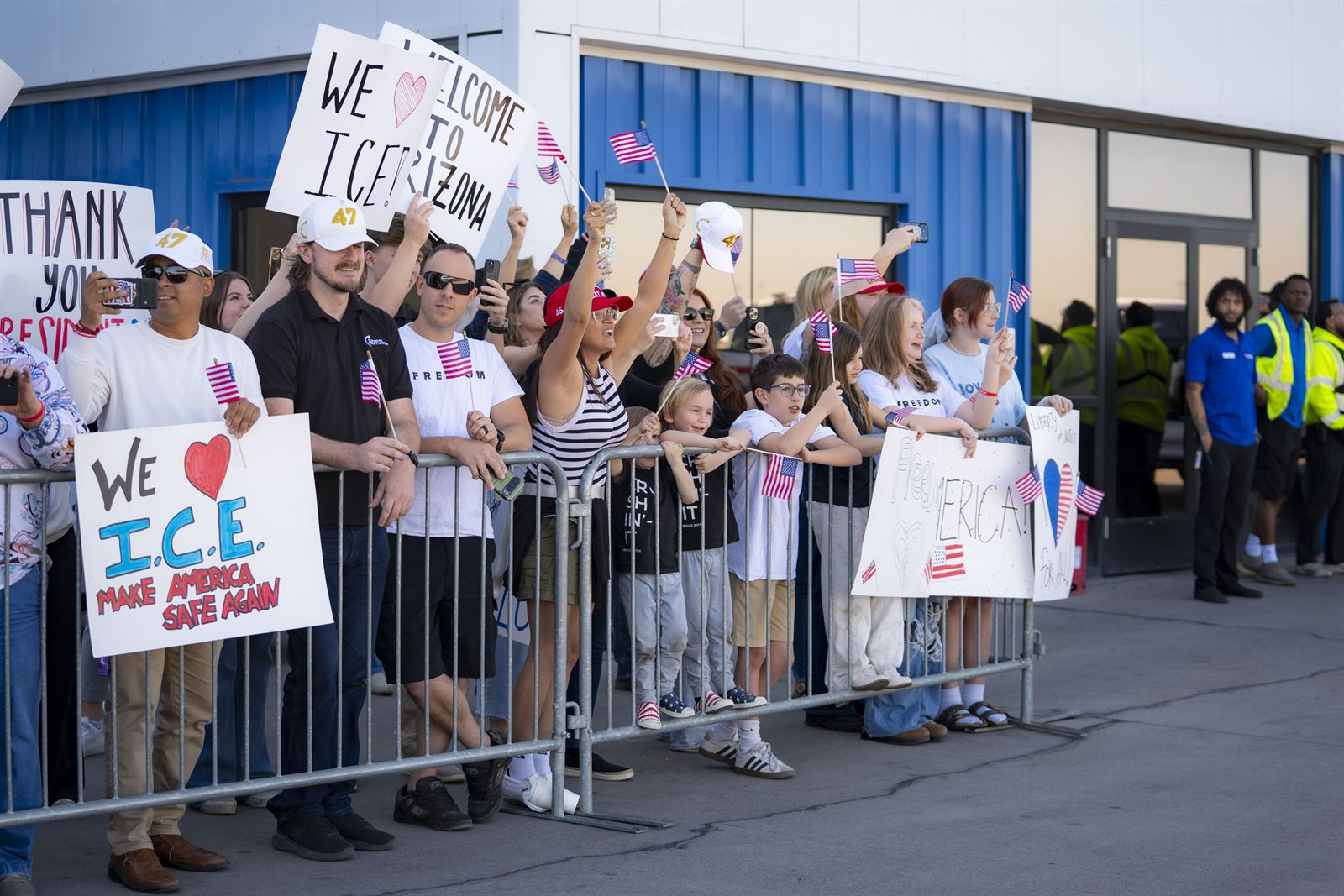
- Phoenix, Arizona (55076503847), photo by Gage Skidmore, via Wikimedia Commons (CC BY-SA 2.0): https://commons.wikimedia.org/wiki/File:Phoenix,_Arizona_(55076503847).jpg
.jpg)