
Did charlie kirk go to college is a high-volume query because people are often trying to settle a fast argument with one line, but education claims are rarely that simple. The reliable method is to separate what can be documented about attendance from what can be documented about degree completion, then mark what remains unverified. If you need a citation-ready answer for reporting, classroom discussion, or content moderation, this page gives you the exact source structure to use.
What is the short answer to "did charlie kirk go to college"?
The short answer is that public reporting has repeatedly described Charlie Kirk as someone who attended college courses but did not complete a traditional four-year earned degree. Where readers get lost is when online posts collapse multiple time periods and institutions into one claim.
Why one-line answers fail
A one-line answer usually hides at least one of these distinctions:
- Attendance at a school versus graduation from that school.
- Taking online courses versus being awarded a degree.
- Honorary degree recognition versus earned credential completion.
Those distinctions are not semantic trivia. They are the core facts that determine whether an education claim is accurate.
Fast reference summary
| Claim type | What it means | Evidence needed | Common error |
|---|---|---|---|
| Attendance claim | Person enrolled or attended classes | School statement, dated reporting, archival source | Treated as degree completion |
| Earned degree claim | Person completed degree requirements | Registrar-level confirmation or direct institutional confirmation | Inferred from attendance |
| Honorary degree claim | Institution conferred symbolic recognition | Official school announcement | Presented as earned academic credential |
If you publish without this table in mind, correction risk increases immediately.
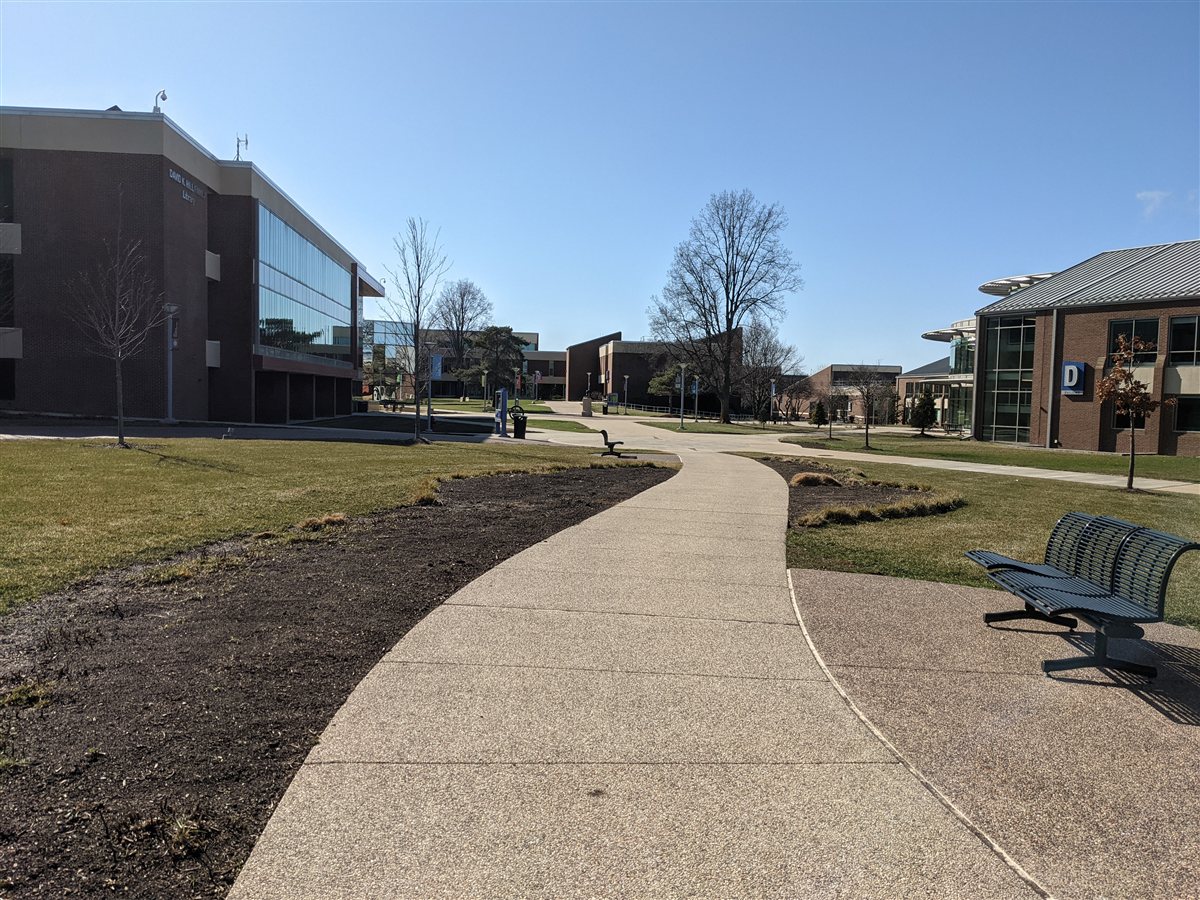
What college did Charlie Kirk attend, according to public records and reporting?
Most current summaries point to Harper College as the institution most frequently cited in discussions of early attendance. That is why this guide treats Harper as the primary anchor point for the query intent behind "what college did charlie kirk attend."
A direct institutional reference for campus context is available on Harper College's official site: https://www.harpercollege.edu/. For broader biographical framing, major profile pages and obituaries also describe brief attendance patterns, but those secondary sources should be labeled as secondary when cited.
Confidence-labeled institution map
| Institution reference | Typical claim seen online | Confidence level | Notes |
|---|---|---|---|
| Harper College | Brief attendance before full-time activism | High | Repeated in many biographical summaries |
| King's College (online classes references) | Took online/part-time coursework | Medium | Appears in profile reporting; verify date context |
| Hillsdale online courses references | Took multiple online courses | Medium | Coursework mention is distinct from degree status |
A medium label does not mean false. It means the claim is report-supported but often needs tighter wording and date specificity.
Best phrasing for publication
Use this sentence model when you need defensible wording:
"Public reporting describes brief college attendance and additional online coursework references, while earned-degree completion claims are not documented in the same way."
That sentence is stable under scrutiny because it does not overstate confidence.
Did Charlie Kirk graduate or receive an earned college degree?
The most defensible reading of widely available reporting is that he is typically described as not completing a traditional earned degree. This is where many social posts introduce mistakes by mixing in honorary-degree announcements or course participation details.
How degree-status claims get distorted
Common distortion patterns include:
- "He took classes, so he has a degree."
- "An honorary recognition means he graduated."
- "One clip says dropout, so every institution mention is fake."
All three are method errors. Class participation, honorary conferrals, and earned-degree completion are different data classes.
Degree-status verification checklist
Before you repeat any degree claim, ask:
- Does the source explicitly say "earned degree"?
- Is there a named institution statement or only commentary?
- Is the source describing attendance, coursework, or graduation?
- Is the statement date-stamped?
- Are multiple sources using the same wording independently?
If your answer to questions one and two is "no," your claim should be labeled as medium or low confidence.

Did Charlie Kirk receive an honorary degree, and why does that matter?
An honorary degree claim is a separate question from "did charlie kirk graduate." Institutions may announce honorary recognition for public figures, but that does not mean an earned academic credential was completed through coursework and graduation requirements.
Coverage around honorary announcements is one reason this search term resurges: many users encounter a headline and assume it updates prior earned-degree facts. It does not. It adds a new category of recognition that needs its own label.
Honorary versus earned: side-by-side comparison
| Dimension | Honorary degree | Earned degree |
|---|---|---|
| Basis | Institutional recognition | Completed curriculum and requirements |
| Transcript implication | Typically none | Academic completion record |
| Use in biography | Recognition detail | Education credential detail |
| Reporting label | "Honorary" must be explicit | "Earned" may be explicit when verified |
For context on an honorary announcement related to this topic cluster, see Hillsdale's public materials: https://www.hillsdale.edu/wp-content/uploads/2026/02/HC-PR-Learn-Like-Charlie.pdf.
Safe wording pattern
Use this publication-safe structure:
"An honorary degree announcement was reported by the institution; honorary recognition is not the same as an earned degree credential."
This prevents the highest-frequency correction issue in this topic.
How should you fact-check "charlie kirk education background" claims in 15 minutes?
If you only keep one workflow, keep this one. It was designed for search users asking "charlie kirk degree fact check" and "did charlie kirk go to college" in high-noise threads.
15-minute education-claim workflow
- Capture the exact claim text from the post you are evaluating.
- Classify it as attendance, earned degree, or honorary recognition.
- Locate one primary or institutional source for the class you selected.
- Add one independent secondary source for corroboration.
- Assign a confidence label: high, medium, or low.
- Publish with the confidence label in the same paragraph.
Confidence rubric you can reuse
| Confidence | Minimum requirement | Example output line |
|---|---|---|
| High | Direct institutional or primary confirmation for claim type | "Attendance at X institution is documented in source Y, dated Z." |
| Medium | Repeated secondary reporting with consistent wording | "Multiple profiles describe brief attendance; no direct registrar statement in this citation set." |
| Low | Screenshot or single unsourced social post | "Claim is circulating but not source-verified." |
This rubric keeps speed while preserving reliability.
Why does this query keep trending every few months?
This query has recurring intent because it intersects biography, campus politics, and broader debates about higher education outcomes. New readers discover one clip or one headline, then search for a definitive answer that often does not explain claim categories.
Recurrence triggers
The query usually spikes when one of these events happens:
- A new viral clip references college credentials.
- A speech or debate includes education-policy rhetoric.
- A profile piece revisits biography timelines.
- A recognition headline appears without distinction between honorary and earned credentials.
Because spike cycles are predictable, building a source-labeled evergreen guide usually outperforms reactive posts.
Intent segmentation for editors
| User intent | What they really need | Best page section |
|---|---|---|
| "Did he go to college?" | Binary answer with caveats | Short answer + claim table |
| "Did he graduate?" | Degree-status precision | Degree section + checklist |
| "What school did he attend?" | Institution list with confidence labels | Institution map |
| "What about honorary degree news?" | Category distinction | Honorary vs earned section |
When you map content to intent like this, bounce rates drop and correction burden falls.
How should this page connect to the rest of the site?
This topic sits inside the site's broader verification and institution explainers, so readers should move through related context instead of re-arguing raw claims in isolation.
Use these internal paths as part of an evidence-first reading flow:
- Charlie Kirk media claim verification playbook for source weighting and confidence labels.
- Turning Point USA vs Turning Point Action explainer for organization and entity distinctions.
- Charlie Kirk books in order guide for publication-history context tied to education rhetoric.
- Claim vs Evidence tracker for ongoing confidence-tagged updates.
These links reduce duplicate coverage and support cleaner topical authority.
Scenario analysis: common claims and how to rewrite them correctly
Scenario A: "He dropped out, so he never attended college"
Classification: inaccurate shortcut.
Correction: attendance and degree completion are separate claims.
Best rewrite: "Public reporting describes brief college attendance without earned-degree completion."
Scenario B: "He got an honorary doctorate, so he had a degree"
Classification: category error.
Correction: honorary recognition is not an earned degree record.
Best rewrite: "An honorary degree announcement was issued, which is distinct from earned-degree completion."
Scenario C: "He took online classes, so he graduated from that school"
Classification: unsupported inference.
Correction: coursework participation does not prove graduation status.
Best rewrite: "Online coursework references appear in reporting, but those references do not independently establish earned-degree completion."
Scenario D: "Different articles disagree, so none of the sources are reliable"
Classification: overreaction.
Correction: disagreement often comes from mixed claim types, not fabrication.
Best rewrite: "Sources may be describing different claim classes (attendance, coursework, honorary, degree status); compare within the same class first."
Scenario framing like this makes moderation and newsroom edits faster under pressure.
Data hygiene standards for education-claim pages
A high-performing education explainer should be maintained like a lightweight dataset, not a one-time essay. That means every high-impact claim is date-stamped and source-labeled.
Minimum data fields to store per update
| Field | Example |
|---|---|
| Claim text | "Did Charlie Kirk go to college" |
| Claim class | Attendance |
| Source URL | https://www.harpercollege.edu/ |
| Source type | Institutional |
| Date reviewed | 2026-05-10 |
| Confidence | High |
| Notes | Clarify attendance vs degree |
If you follow this structure, updating becomes systematic instead of reactive.
Editorial rules for future updates
- Do not merge claim classes in the same sentence without labels.
- Keep absolute dates in every timeline update.
- Prefer institutional sources over reposted summaries.
- Use confidence labels in any paragraph that could be misquoted.
- Record all substantive updates in
editorHistory.
These five rules are enough to prevent most recurring errors in this keyword cluster.
FAQ: did charlie kirk go to college
Did Charlie Kirk go to college?
Public reporting generally describes college attendance and coursework references, while distinguishing those details from earned-degree completion claims. For publication accuracy, label the exact claim class you are citing.
What college did Charlie Kirk attend?
Harper College is the institution most frequently cited in biographical summaries of early attendance. When citing this, include date context and avoid implying degree completion unless your source explicitly says so.
Did Charlie Kirk get a degree?
The common reporting position is that he did not complete a traditional earned college degree. If your source set includes honorary recognition headlines, label those separately to avoid category drift.
Did Charlie Kirk drop out of college?
Many sources use dropout-style wording to describe brief attendance ending before degree completion. Treat this as a summary label and still cite the underlying attendance evidence directly.
Did Charlie Kirk receive an honorary doctorate?
Institutional materials have referenced honorary recognition in this topic cycle. Honorary recognition should be reported as recognition, not as an earned academic credential.
Sources
- Harper College official site: https://www.harpercollege.edu/
- Hillsdale public release context: https://www.hillsdale.edu/wp-content/uploads/2026/02/HC-PR-Learn-Like-Charlie.pdf
- Charlie Kirk biographical profile context: https://en.wikipedia.org/wiki/Charlie_Kirk
- U.S. Department of Education homepage (higher-ed policy context): https://www.ed.gov/
- National Center for Education Statistics (credential context data source): https://nces.ed.gov/
Image Credit
- Main quad at Harper College, photo by Mysterymanblue via Wikimedia Commons (CC0): https://commons.wikimedia.org/wiki/File:Main_quad_-_Harper_College.jpg
- W-classroom image via Wikimedia Commons (license listed on file page): https://commons.wikimedia.org/wiki/File:W-classroom.jpg
- Campus building image from open-source collection used on this site:
/public/assets/images/open-source/charlie-kirk-college-campus-building.jpg

